
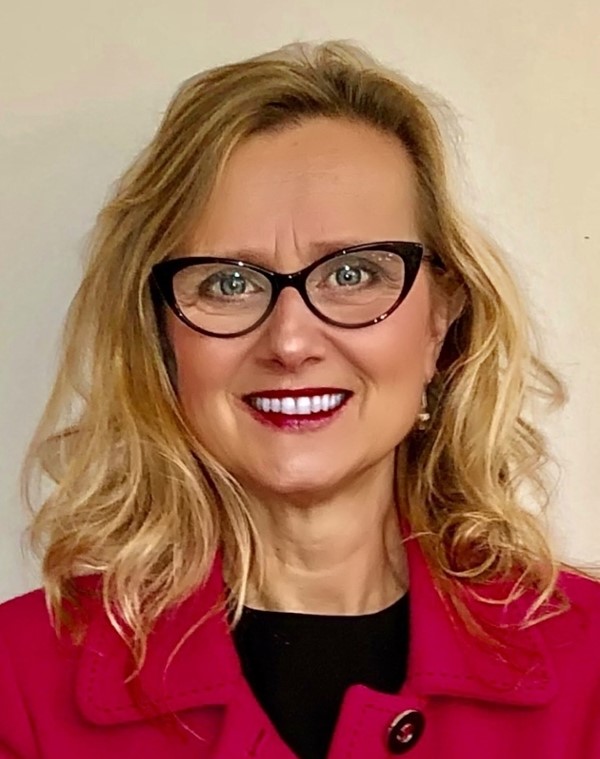
VC Legal UK is now an established Immigration law practice. Would you share with us your experience of how difficult it was to enter into the legal profession in the UK?
Vesna: I started my legal career in the UK in 1995 when I joined a solicitor’s firm in London. It was as difficult then as it is today to enter the legal profession so, in addition to the law qualification, it was a knowledge of foreign languages that helped me secure my first legal position. After 10 years of practicing immigration law, I decided to start up my own business, an immigration law practice, in 2008. Since then, the business has been growing successfully, and we’re proud to have clients from around the world, including many from Serbia, that are using our legal services.
Can you tell us what challenges VC Legal UK is facing as an immigration law practice and also comment about the most recent immigration changes that can be of interest to our members?
Vesna: We practice in all areas of UK Immigration and Nationality law so keeping abreast of all legislative changes is of utmost importance. Needless to say, the last few years have been challenging. The UK Government has implemented many changes in Immigration law as a result of Brexit and the Covid pandemic, and launched specific schemes for Ukraine and Hong Kong overseas nations, as well as published the Nationlity and Borders Act 2022.
In April 2022 the UK Government also published new Global Business Mobility visa categories. Five new categories have been introduced to enable business expansion between overseas and UK companies linked with common ownership. Undoubtedly, there will be more opportunities also for Serbian companies to explore.
Moreover, we have had to adapt to a more digitalised system the Home Office has implemented for processing visa applications, such as a mobile app to check applicant’s identity, (UK Immigration ID check, EU Exit ID check etc). Looking into the future with increasing digitalisation, the Home Office has proposed plans to roll out eVisas and introduced an Electronic Travel Authorisation (ETA) Scheme.
How can VC Legal UK assist companies to meet the needs of the current shortage of labour that we hear about in the UK?
Vesna: VC Legal UK has developed expertise in successfully obtaining sponsorship licences. These are needed by companies intending to recruit from abroad, and hence opens up opportunities for businesses to have access to global talent worldwide. We aim to take a leading role in advancement of this process to satisfy the need of our growing economy.
You have been a valued member of the BSCC for over a decade, could you please elaborate on any progression of the BSCC you have seen over the years and how it has perhaps helped your business?
Vesna: During my time of being an active member of the BSCC I have witnessed how the Chamber has grown, and gained more presence and impact in both Serbia and the UK. Over the years, I have participated in many events organised by the BSCC in London. These events have created an excellent platform for the exchange of knowledge and expertise in different sectors between the UK and Serbian business communities. Most recently, I attended a Wine Testing evening at the Serbian Embassy in London, which was a very successful.
I find that the BSCC events provide plenty of opportunities to meet prospective clients and businesses. We are always happy to assist with immigration issues for when people are relocating to the UK. Our vision for the future is to use our expertise to help expand business between the two countries.
Lastly, I’d like to congratulate Jadranka and the team at BSCC for all their great work and ongoing commitment to support and encourage Serbian and UK collaboration. I am looking forward to many more exiting events in 2023.


